My Grandma's Kimchi (Kimchee)김치 Recipe
Highlighted under: From Around the Globe
Experience the authentic taste of Korean cuisine with my Grandma's Kimchi recipe. This traditional dish combines the perfect balance of crisp vegetables, aromatic spices, and a touch of fermentation to create a delightful and tangy side dish. Perfect for enhancing bowls of rice, wrapped in lettuce, or simply enjoyed straight from the jar, this homemade kimchi is a must-try for any food enthusiast.
This kimchi recipe has been passed down for generations, bringing warmth and flavor to our family meals.
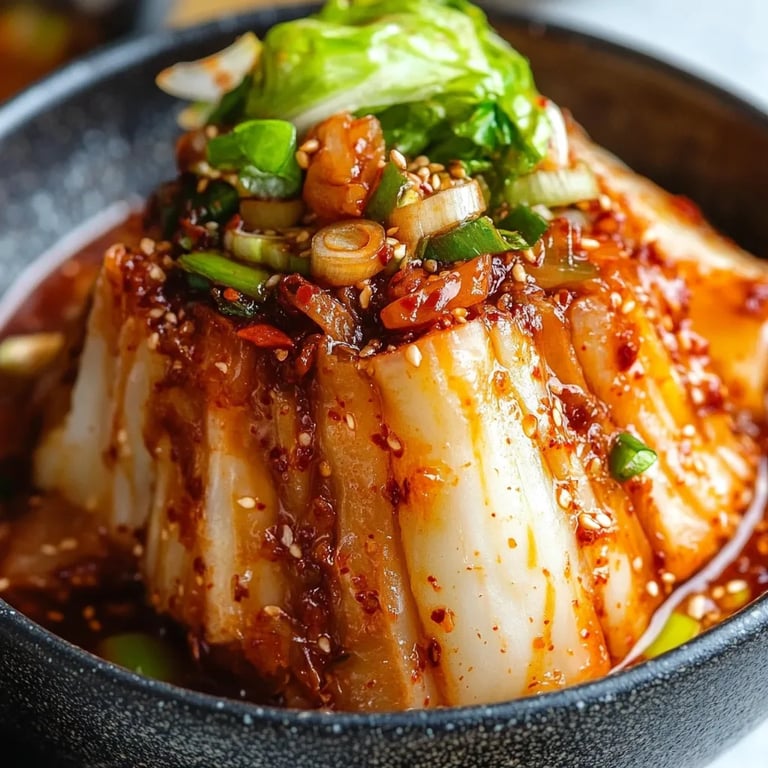
The Tradition of Kimchi
Kimchi is more than just a dish; it’s a staple of Korean culture and culinary heritage. Historically, kimchi was developed as a way to preserve vegetables during harsh winters, making it a crucial part of Korean diets. Today, it represents a symbol of familial love and tradition. Many families have their own variation passed down through generations, each with its unique twist while staying true to its roots. This recipe honors my grandmother’s methods, ensuring that each bite carries a story from the past.
Fermentation is the process that gives kimchi its signature tangy flavor and health benefits. By allowing the ingredients to ferment, beneficial probiotics are created, which can aid in digestion and boost the immune system. Making kimchi not only celebrates the flavors of Korea but also embraces the health benefits associated with fermented foods. Thus, every spoonful of my Grandma's kimchi is a taste of nourishment.
Moreover, kimchi is incredibly versatile. It is not only served as a side dish but can also be incorporated into a variety of meals, from stews and pancakes to fried rice. This adaptability makes it a beloved component in many homes, appealing to both traditionalists and modern chefs alike. No matter how you enjoy it, the robust flavors and health benefits of kimchi make it a delightful addition to any table.
Serving Suggestions
While kimchi can be enjoyed straight from the jar, it truly shines when paired with other dishes. A classic way to serve kimchi is alongside a steaming bowl of rice, where the tanginess cuts through the richness of the grain. You can also wrap it in green lettuce leaves for a delightful and crunchy treat. This combination not only creates a satisfying textural contrast but also balances the meal with a burst of flavor.
Want to elevate your meals? Use kimchi as a key ingredient in stir-fried dishes or as an aromatic addition to soups. Kimchi fried rice is especially popular, where the dish is stirred with leftover rice and topped with an egg for a full meal. You can also toss kimchi into savory pancakes or use it to create unique dips that add excitement to your appetizer platter.
For those looking for a refreshing twist, blend kimchi into smoothies for a spicy kick or chop it finely and mix it into salads. The crunch of the vegetables combined with the fiery seasoning of kimchi can transform a simple salad into a flavor-packed delight. No matter how you choose to serve it, my Grandma's kimchi will surely enhance your dining experience.
Ingredients
Gather these ingredients to get started:
Vegetables and Seasonings
- 1 large Napa cabbage
- 1/2 cup sea salt
- 4 cups water
- 1 daikon radish, julienned
- 1 carrot, julienned
- 4 green onions, chopped
- 5 cloves garlic, minced
- 1 inch ginger, grated
- 2 tablespoons sugar
- 1/2 cup Korean red pepper flakes (gochugaru)
- 1 tablespoon fish sauce
Once you have everything ready, let's move on to the preparation.
Instructions
Follow these steps to make your kimchi:
Prepare the Cabbage
Cut the Napa cabbage lengthwise into quarters and remove the core. Chop the cabbage into bite-sized pieces. In a large bowl, dissolve sea salt in water, then soak the cabbage in the brine for 2 hours, turning occasionally.
Make the Kimchi Paste
In a separate bowl, mix the garlic, ginger, sugar, gochugaru, and fish sauce to form a paste.
Combine Ingredients
After 2 hours, rinse the cabbage under cold water to remove excess salt. Drain well. In a large mixing bowl, combine the cabbage, radish, carrot, green onions, and kimchi paste. Mix thoroughly with gloves until everything is evenly coated.
Ferment the Kimchi
Pack the kimchi into a clean glass jar, pressing down to remove air pockets. Leave at room temperature for 1-2 days to ferment, then refrigerate.
Your homemade kimchi is now ready to enjoy!
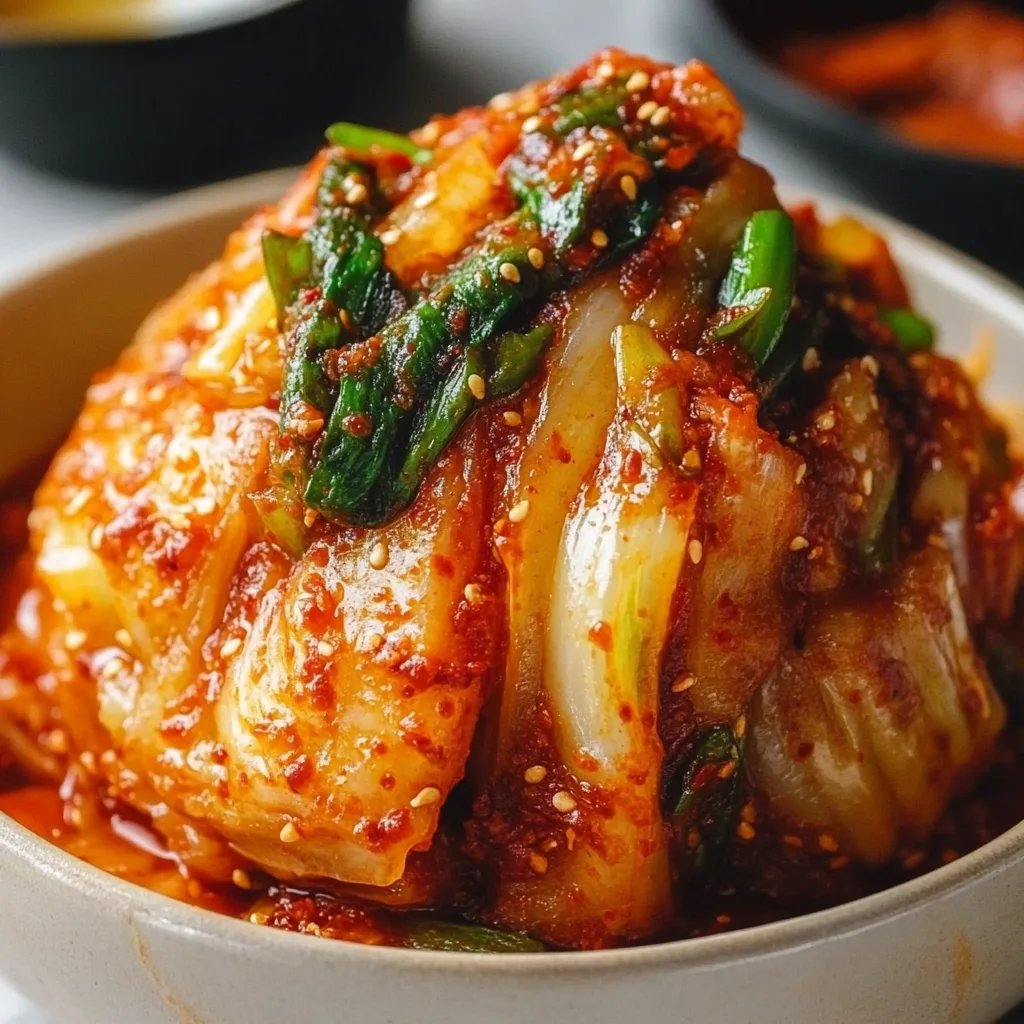
Pro Tips
- For extra crunch, consider adding cucumbers to your mix.
Tips for Perfect Kimchi
When making kimchi, the quality of your ingredients can significantly impact the final product. Using fresh, crisp vegetables is essential to achieving the desired crunch. Organic or locally sourced Napa cabbage and radish will enhance the flavors and ensure a better fermentation process. Additionally, using high-quality gochugaru adds the necessary heat and vibrant color to your kimchi, so don’t skimp on this key ingredient.
Timing is also crucial during the fermentation process. Depending on your environment, the ideal fermentation period can vary. If your kitchen is warmer, you may want to check your kimchi after 1 day; if it's cooler, it might take up to 3 days. Keep tasting your kimchi daily—you want it to reach your preferred level of tanginess before moving it to the refrigerator.
Don't forget that kimchi continues to develop its flavors while it sits in the fridge. The longer it ages, the more pronounced its taste will become. For best results, consume the kimchi fresh for its crunch, or let it ferment longer for a robust flavor profile.
Storing Kimchi
Storing kimchi properly is vital to maintaining its flavor and texture. After fermentation, transfer your kimchi to an airtight glass jar to minimize exposure to air, which can lead to spoilage. Make sure to pack it down firmly to limit the air pockets, allowing the kimchi to remain submerged in its brine. This helps preserve its crispiness and extends its freshness.
Kimchi can be kept in the refrigerator for several months, but it’s best eaten within 3-4 weeks for optimal flavor and crunch. As time passes, the taste will become more intense, making it a great ingredient for cooking or adding to various dishes. Just remember to always use clean utensils when scooping out the kimchi to prevent contamination.
If you find yourself with an abundance of kimchi, consider freezing some. While the texture may change upon thawing, the flavors will remain intact, making it perfect for adding to cooked meals later. To freeze, place your kimchi in a freezer-safe container, leaving some space at the top for expansion, and enjoy it later in your favorite recipes.
Questions About Recipes
→ How long does kimchi last?
Kimchi can last for several months when refrigerated, fermenting further over time.
→ Can I customize the spice level?
Absolutely! Adjust the amount of gochugaru according to your taste preferences.
My Grandma's Kimchi (Kimchee)김치 Recipe
Created by: Ruby Lawson
Recipe Type: From Around the Globe
Skill Level: Intermediate
Final Quantity: 10 servings
What You'll Need
Vegetables and Seasonings
- 1 large Napa cabbage
- 1/2 cup sea salt
- 4 cups water
- 1 daikon radish, julienned
- 1 carrot, julienned
- 4 green onions, chopped
- 5 cloves garlic, minced
- 1 inch ginger, grated
- 2 tablespoons sugar
- 1/2 cup Korean red pepper flakes (gochugaru)
- 1 tablespoon fish sauce
How-To Steps
Cut the Napa cabbage lengthwise into quarters and remove the core. Chop the cabbage into bite-sized pieces. In a large bowl, dissolve sea salt in water, then soak the cabbage in the brine for 2 hours, turning occasionally.
In a separate bowl, mix the garlic, ginger, sugar, gochugaru, and fish sauce to form a paste.
After 2 hours, rinse the cabbage under cold water to remove excess salt. Drain well. In a large mixing bowl, combine the cabbage, radish, carrot, green onions, and kimchi paste. Mix thoroughly with gloves until everything is evenly coated.
Pack the kimchi into a clean glass jar, pressing down to remove air pockets. Leave at room temperature for 1-2 days to ferment, then refrigerate.
Extra Tips
- For extra crunch, consider adding cucumbers to your mix.
Nutritional Breakdown (Per Serving)
- Calories: 50
- Fat: 0g
- Carbohydrates: 10g
- Protein: 1g